
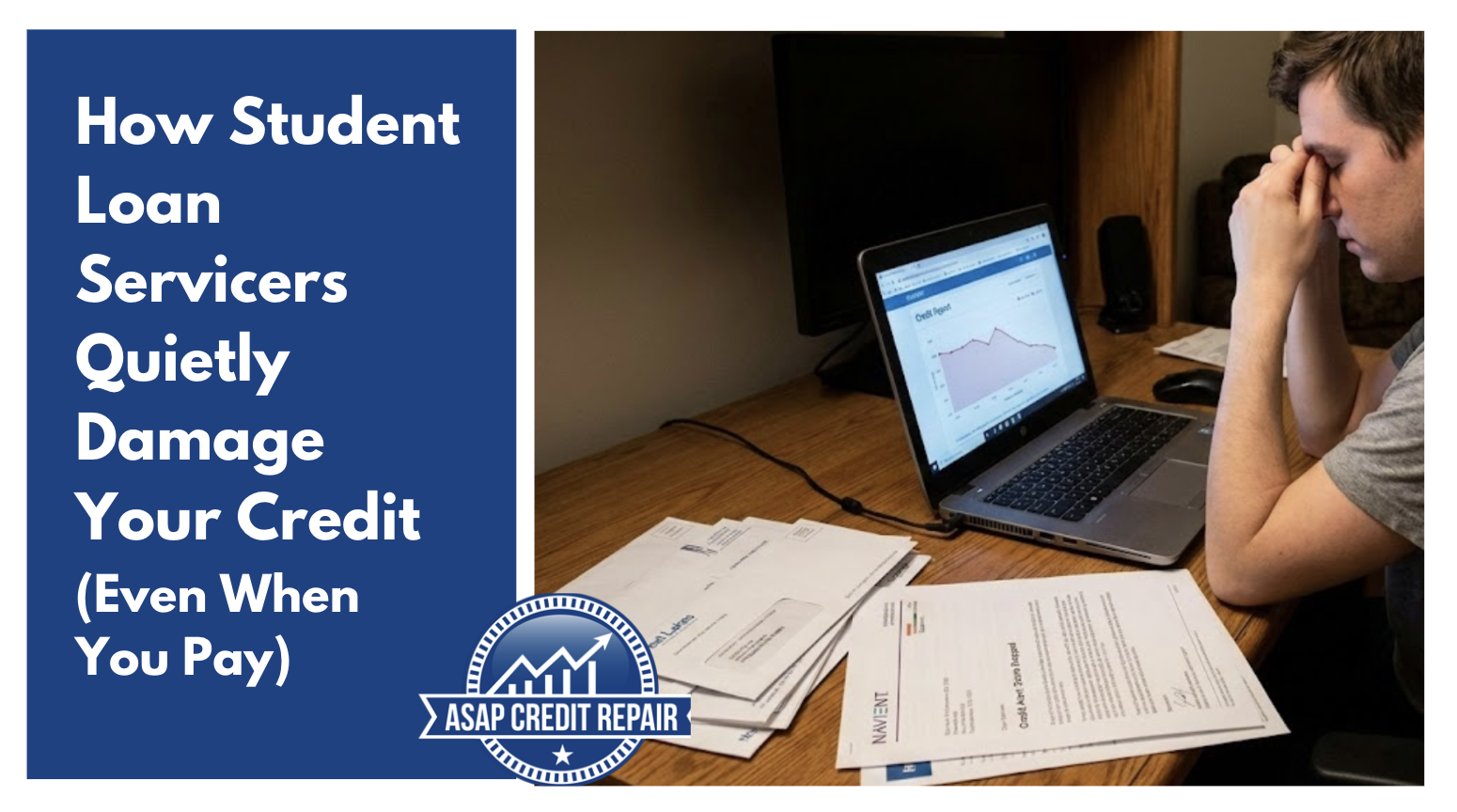
You make your student loan payments on time every month. You check your account. Everything looks fine. But then you check your credit score and get a shock. It's dropped by 100 points or more.
How did this happen? You did everything right.
The problem isn't you. It's your student loan servicer. These companies handle your loan payments and reports to credit bureaus. But they make mistakes.
And these mistakes can destroy your credit score even when you never miss a payment.
The Silent Credit Score Killer
According to credit report data, approximately 30% of credit reports contain errors. For student loan borrowers, these errors can be especially damaging.
Research from the New York Federal Reserve shows that a single student loan delinquency can drop credit scores by massive amounts. Borrowers with good credit, around 760, can lose 171 points. Even people with lower credit scores lose an average of 87 points.
That's enough to turn an excellent credit score into a poor one. It can cost you thousands of dollars in higher interest rates. It can stop you from getting approved for a mortgage or car loan. Some employers even check credit scores before hiring.
The worst part? Many of these delinquencies are mistakes. They shouldn't be on your credit report at all.

How Servicers Damage Your Credit Without You Knowing

The Double Reporting Problem
One major error affects millions of borrowers when loans transfer between servicers. Here's what happens.
Your loan starts with Servicer A. Let's say you owe 50,000 dollars. This gets reported to credit bureaus. Then your loan transfers to Servicer B. They also report that you owe 50,000 dollars.
Now your credit report shows you owe 100,000 dollars in student loans. Your actual debt didn't change. But credit bureaus think it doubled.
This exact situation happened when Nelnet transferred loans to MOHELA. Millions of borrowers suddenly showed twice their actual debt on credit reports. This error can destroy credit scores overnight.
Payments That Disappear
Student loan servicers sometimes fail to record payments correctly. They receive your money. Your bank shows the payment went through. But the servicer's system doesn't process it properly.
Your account shows as late. This gets reported to credit bureaus. You get a delinquency mark on your credit that stays for seven years. All because of a processing error you had no control over.
According to reports from the Consumer Financial Protection Bureau, borrowers regularly complain about payments being misapplied or lost completely by servicers.

Wrong Payment Amounts
In 2023, the Department of Education revealed that 305,000 borrowers received billing statements with incorrect payment amounts. When you pay what the servicer tells you to pay, but it's the wrong amount, you might end up marked as delinquent.
MOHELA, one of the largest servicers, sent late billing statements to 2.5 million borrowers. More than 830,000 became delinquent because they never received proper notice. The Department of Education withheld over 7 million dollars in payments to MOHELA as punishment.
But that doesn't help the borrowers whose credit was already damaged.
Loans Marked Delinquent During Deferment
Some servicers report loans as late even when they're in approved deferment or forbearance. You're not supposed to make payments during these periods. But errors in servicer systems can flag your account as delinquent anyway.
This happens when enrollment status information gets mixed up. If you're still in school or recently went back to school, servicers sometimes miss this update. They expect payments you're not required to make. When you don't pay, they report you as delinquent.
Payment Transfers Gone Wrong
When you make a payment, servicers must apply it correctly. But they often make mistakes about where the money goes.
Some servicers put payments toward interest instead of principal. Others apply payments to the wrong loan when you have multiple loans. These errors can make it look like you're behind on payments when you're actually current.
A report on Public Service Loan Forgiveness found over five million servicing errors from just one company. These mistakes cost borrowers years of progress toward loan forgiveness. They also damaged credit scores.
The Current Crisis
Right now, student loan credit damage is hitting record levels. According to TransUnion data from 2025, about 31% of federal student loan borrowers with payments due are at least 90 days past due. That's nearly triple the rate from before the pandemic.
An estimated 5.8 million borrowers have new delinquencies reported to credit bureaus. Of these, roughly 1.8 million could reach default status soon.
Borrowers who are newly reported as delinquent have seen their credit scores drop by an average of 60 points. Many of these people made payments. The problem is servicer errors and confusion about payment amounts.
The situation got worse when the payment pause ended. Servicers struggled to handle the restart. About 24 million borrowers had their loans transferred to different servicers. This created more chances for errors.
Why These Errors Happen So Often
Too Many Loan Transfers
The federal student loan system has gone through massive changes. Several servicers left the program. Loans got transferred to new companies. Each transfer creates chances for information to get lost or corrupted.
When your loan moves from one servicer to another, payment history must transfer correctly. But data systems don't always sync properly. Information falls through the cracks.
Poor Record Keeping
Investigation reports show that some servicers have terrible record keeping. Missing payment records. Incomplete loan histories. Lost paperwork.
When borrowers try to prove they made payments, servicers can't find the records. Without proof, credit bureaus side with the servicer. Your credit stays damaged.
Outdated Computer Systems
Many servicers use old technology that doesn't work well. Systems that can't properly track complex repayment plans. Programs that miscalculate payment amounts. Software that fails to update when borrowers enter deferment.
These technical problems create errors that hurt borrowers.
Lack of Accountability
For years, servicers faced few consequences for errors. The Department of Education has started holding them more accountable. But damage to borrowers often happens before anyone catches the mistakes.
The Real Cost of Credit Damage
Credit score damage costs real money and creates real problems in your life.
Higher Interest Rates
According to industry data, people with lower credit scores pay much higher interest rates. The difference can add up to tens of thousands of dollars over the life of a car loan or mortgage.
If servicer errors drop your score from 750 to 650, you might pay 2 to 3 percent more interest on a mortgage. On a 300,000 dollar home loan, that's an extra 60,000 to 90,000 dollars over 30 years.

Denied Credit Applications
Many borrowers report being denied for credit cards, car loans, or mortgages because of student loan errors on their credit reports. You lose opportunities because of mistakes you didn't make.
Housing Problems
Landlords check credit scores. A damaged score can mean you can't rent the apartment you want. Some landlords require higher security deposits from people with lower scores.
Job Losses
Some employers check credit as part of background checks, especially for jobs in finance or positions that handle money. Credit damage from servicer errors could cost you job opportunities.
Stress and Time
Fixing credit report errors takes enormous time and effort. You must gather documents. Write dispute letters. Make countless phone calls. Wait weeks or months for responses.
Many borrowers spend dozens of hours trying to fix errors they never caused.
How to Protect Yourself
Check Your Credit Reports Regularly
You can get free credit reports from all three major bureaus once per year at AnnualCreditReport.com. Use this. Check every few months.
Look specifically at your student loan section. Verify the amounts match what you actually owe. Check that no loans appear twice. Make sure payment history is accurate.
Keep Detailed Records
Save everything related to your student loans. Payment confirmations. Bank statements showing withdrawals. Emails from your servicer. Screenshots of your online account.
If errors happen, you need proof. Your records are often the only way to show the servicer made a mistake.
Monitor Your Servicer Account
Log into your servicer account regularly. At least once per month. Check that payments posted correctly. Verify your balance is decreasing as expected. Make sure you're in the right repayment plan.
Catch errors early before they get reported to credit bureaus.
Set Up Alerts
Many credit monitoring services offer free alerts when your credit report changes. Sign up for these. You'll know immediately if something gets reported to your credit.
Early detection gives you more time to fix problems.
Document Everything
When you contact your servicer about problems, write down the date, time, and name of who you spoke with. Take notes about what they said. Follow up phone calls with emails summarizing the conversation.
This documentation helps when you need to dispute errors or file complaints.
What to Do When Errors Happen
Dispute Directly with Your Servicer
Contact your servicer as soon as you spot an error. Call and follow up in writing. Explain exactly what's wrong. Provide supporting documents.
According to the Fair Credit Reporting Act, servicers must investigate disputes. They have 30 days to respond.
Dispute with Credit Bureaus
You can also file disputes directly with Equifax, Experian, and TransUnion. Each bureau has online dispute processes.
Explain the error clearly. Attach proof if you have it. The bureau must investigate within 30 days.
File Official Complaints
If your servicer won't fix errors, file complaints with the Consumer Financial Protection Bureau. Their complaints often trigger higher-level reviews.
You can also complain to your state attorney general's office and the Federal Student Aid Ombudsman.
Consider Legal Help
For serious credit damage that servicers won't fix, you might need a lawyer. Consumer protection attorneys can help you understand your rights under the Fair Credit Reporting Act.
If servicers or credit bureaus acted negligently, you may be entitled to damages. This includes money for harm caused and possibly attorney fees.
Your Rights Under Federal Law
The Fair Credit Reporting Act gives you important protections.
You have the right to accurate credit reports. Companies must report truthful information. You have the right to dispute incorrect information. Credit bureaus and servicers must investigate your disputes properly.
You have the right to sue if companies violate these rules. You can recover actual damages for harm caused. In some cases, you can get statutory damages and punitive damages.
Don't let anyone tell you that you have no options when servicers damage your credit. You have legal rights.
Looking Forward
Student loan servicing has serious problems. The Department of Education knows this. They've started holding servicers more accountable.
But change takes time. Right now, you need to protect yourself.
Stay vigilant about your credit reports. Keep detailed records. Act fast when you spot errors. Use your legal rights when necessary.
Your credit score affects too much of your financial life to ignore servicer errors. Even when you make every payment on time, mistakes can still damage your credit.
The good news is that you can fight back. You have tools and rights. Use them to protect yourself from credit damage you never deserved.